
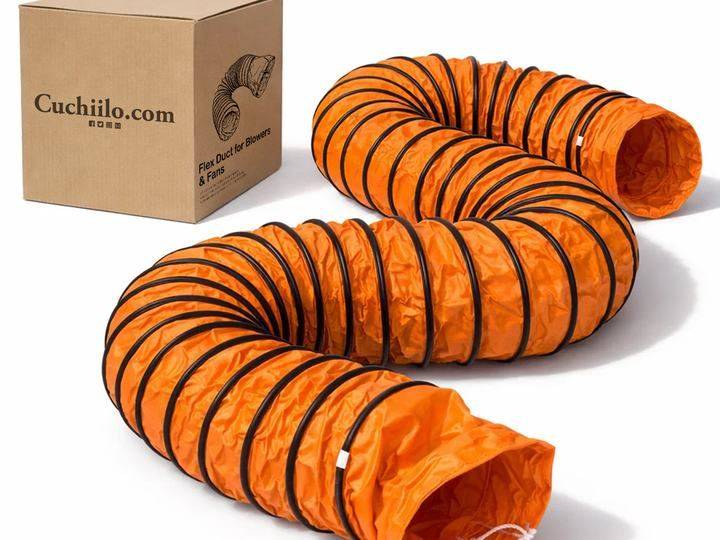
Ventilation Duct (Single Layer)
A plain supply and exhaust duct with no insulation, for exhaust, dust collection and temporary ventilation — it provides no thermal insulation; you pick it because it is cheap, light and easy to bend.
Four layers, what each one does
From inside out:Inner corea foil-polyester laminate that seals the bore, keeps it smooth and resists dust;Insulationthe glass wool — all the thermal resistance comes from this layer; Wire helixholds the shape, resists negative pressure and sets the bend radius;Jacketfoil plus polyester, blocking UV, water and site knocks.
The jacket is the layer most often cut. Cheap duct thins the fourth layer so you cannot tell during installation; a year later it cracks from the joints, moisture follows the cracks into the wool, and by then the insulation has failed while the outside still looks fine.
Where it fits
Three installation points
With no wool layer, using it for cold supply causes immediate condensation — the most common misuse.
Long runs under negative pressure need intermediate hangers or the duct is sucked flat.
Uninsulated duct carries no uniform fire rating; where a project requires one, we supply reports per batch.
FAQ
Can this be used for air-conditioned supply?
Not recommended. Without insulation the cold air makes the wall condense and water drips onto the ceiling.
How much cheaper than insulated duct?
At the same diameter, roughly one third to one half the price of an insulated duct, because there is no wool layer.
Can the diameter be customized?
Yes, cut to length and custom diameters on request.
More technical questions:Technical Q&A (19 answers)