Order hotline 136 0288 9892Guangzhou Jitai · HVAC Insulated Flexible Duct Manufacturer · Shipping to 176 Countries
Guangzhou Jitai 中文Get a Quote

One duct, four ways to specify it

Not every project should use R4.2. Temperature difference, distance and humidity decide — pick the wrong grade and you either fight condensation or waste money.
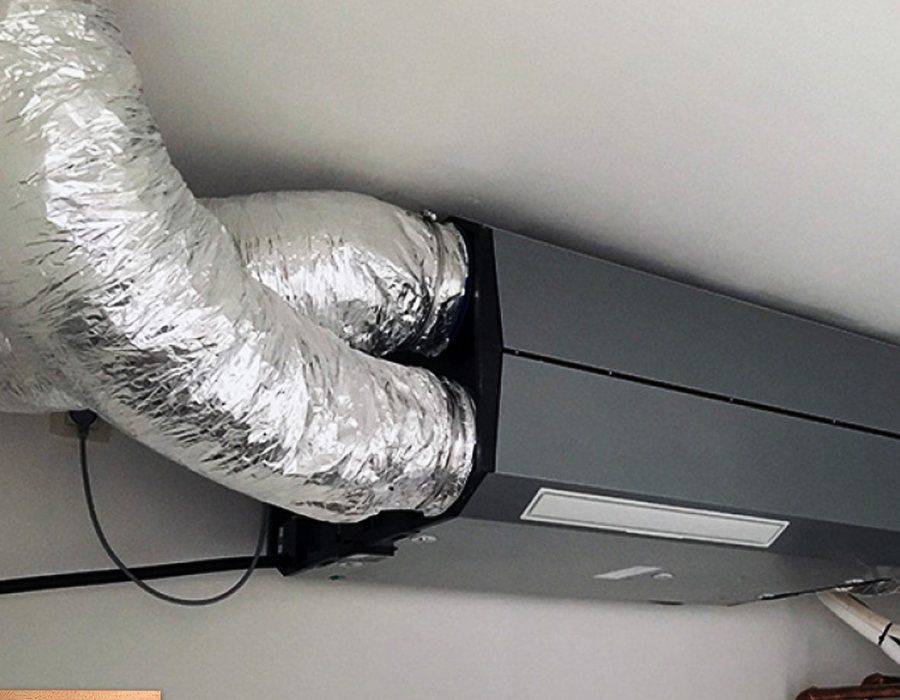
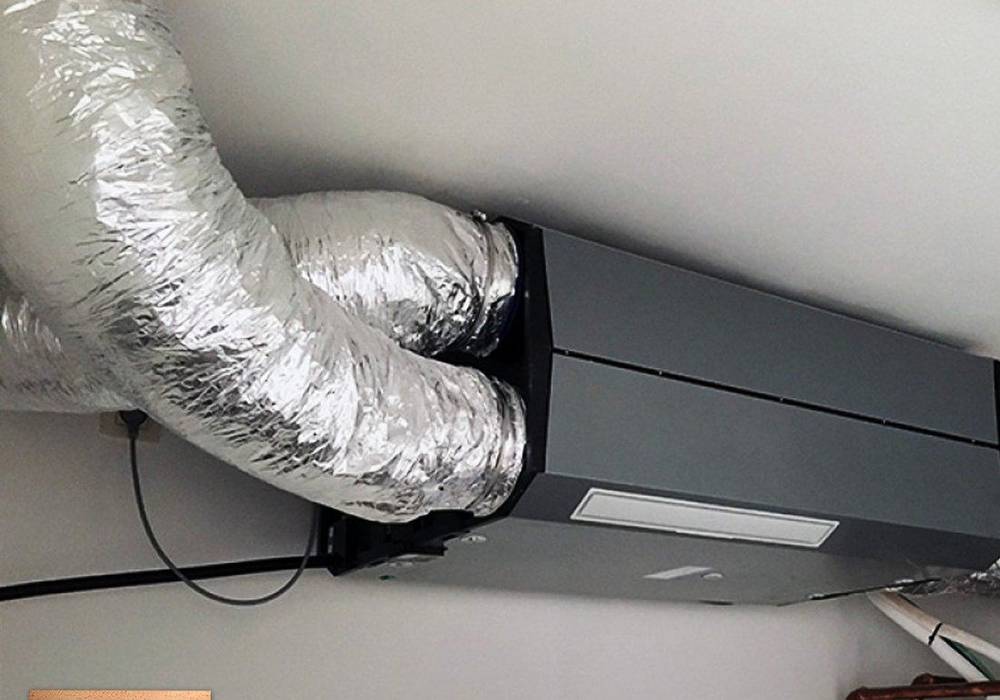
Fan coil to insulated duct connection in guest rooms
Hotels · Apartments · Serviced apartments

Guest-room terminals: do not let condensate drip onto the ceiling

Guest-room branches are short with many elbows; the problem is condensation and rework — not thin insulation, but badly finished joints.
Conditions
Indoor 24–26 °C, RH 50–65%, supply air 12–14 °C inside the duct; branches mostly 3–8 m long.
Recommended
R4.2 (approx. 25 mm) is enough; if a branch crosses a corridor or an unconditioned area, step up to R6.
Key points
Use large-radius elbows and press joints with foil tape; run a cooling test before the ceiling is closed.
The most common mistake: flattening the duct to squeeze under a beam — the creases are the first place to condense.
See the detailed solutions →Size by spec →
Long insulated duct runs above the ceiling
Commercial complexes · Office towers · Retail

Mains above the ceiling: once length climbs, R4.2 stops being enough

Mall and office mains often run twenty or thirty metres; the temperature gain along the way is both a comfort and an energy problem.
Conditions
Mains of 15–40 m through equipment floors or unconditioned ceiling voids, with stable terminal airflow required.
Recommended
R6 (approx. 38 mm) for mains and long runs; drop back to R4.2 at terminal branches.
Key points
Hangers every 1.5 m so the duct does not sag under its own weight; add a sleeve through walls so the jacket does not rub through.
The most common mistake: one grade throughout, then terminal air temperature is always a degree or two off and no airflow adjustment fixes it.
See the detailed solutions →Size by spec →
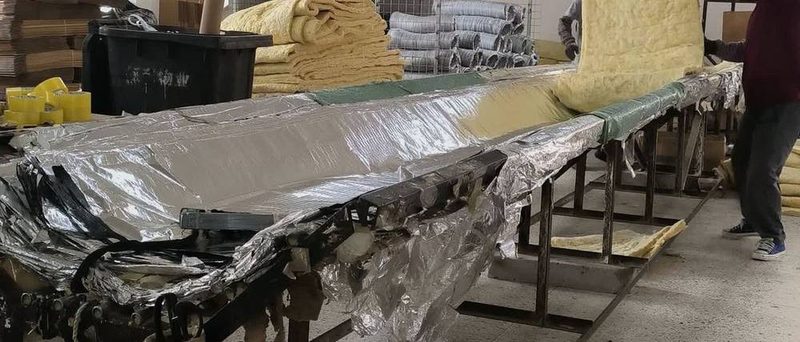
Insulated duct rolls and the production floor in our workshop
Industrial plants · Workshops · Negative pressure

Under negative pressure, a duct without a helix collapses

Dust collection, exhaust and process air in workshops often run under negative pressure, so the wall needs a wire helix to stay round.
Conditions
Negative pressure or a large differential, larger diameters (8–12 inch), with possible vibration and heat.
Recommended
R6 or R8; choose a dense wire helix and keep the bend radius at 1.5 times the outer diameter.
Key points
Shorten hanger spacing to 1.2 m and connect to equipment with a flexible joint, never a rigid butt.
The most common mistake: sizing by diameter alone and ignoring negative pressure — a week into operation the duct is visibly collapsed.
See the detailed solutions →Size by spec →
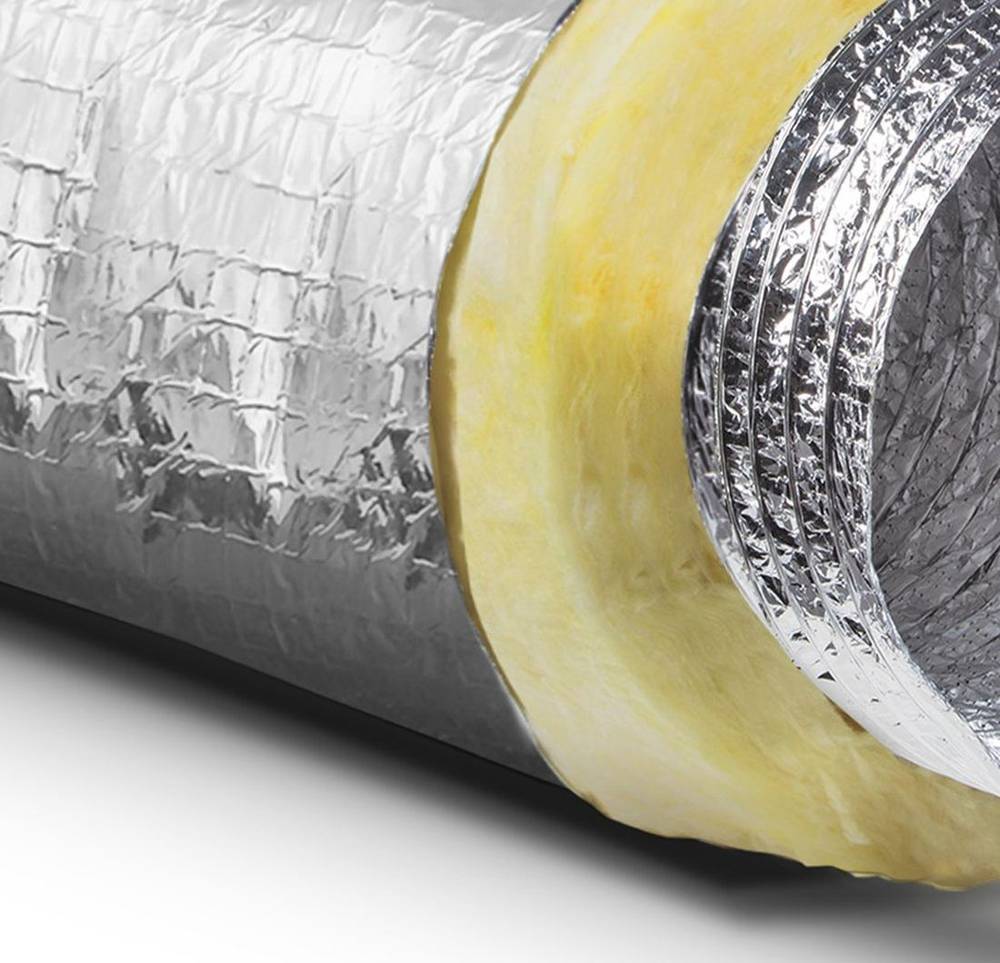
Insulation cross-section: foil jacket, glass wool, inner core
Cold-chain warehouses · Central kitchens · Data halls

Cold and humid: condensation is not a risk, it is a certainty

Cold rooms and plant rooms stay humid year-round; the outer wall sits below dew point and thin insulation beads with water immediately.

Conditions
Ambient 0–10 °C or a humid plant room; duct temperature is lower still, the differential is wide and run times are long.
Recommended
Start at R8 (approx. 50 mm); in damp environments check jacket air-tightness first.
Key points
Double-tape every joint, seal wall penetrations, and never leave an air pocket inside the insulation.
The most common mistake: plain wrap tape instead of foil tape — six months later the adhesive fails and moisture creeps in along the seam.
See the detailed solutions →Size by spec →
Send drawings and we will advise on selection for your conditionsGive diameter, length, ambient temperature and application; we reply with model and price within 48 hours.
Get a Quote