
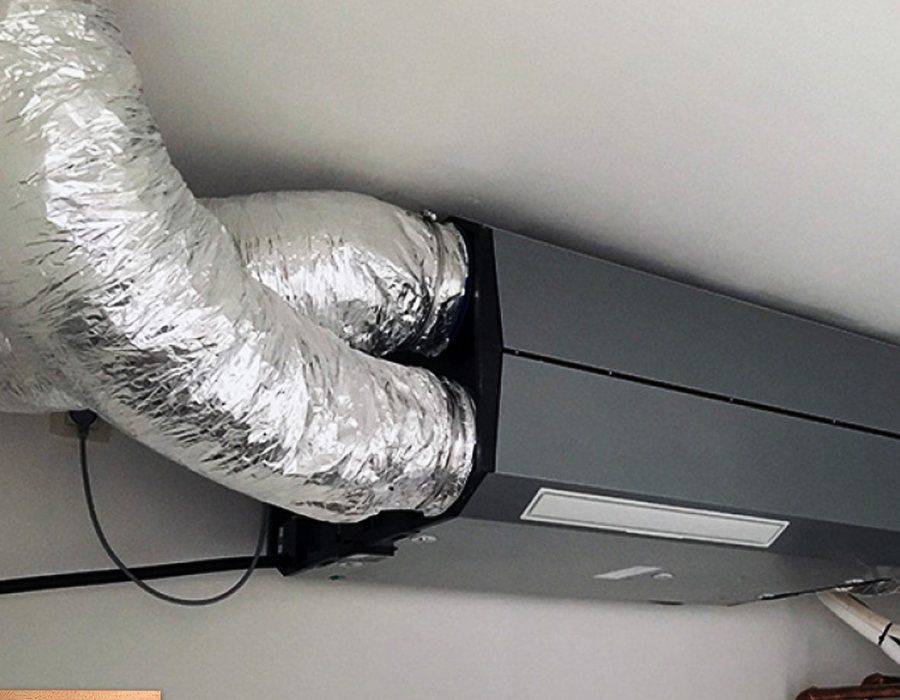
Hotel Guest Rooms & Apartments: Short Terminal Branches
Guest-room branches are short with many elbows; the question is never whether the insulation is thick enough, but whether the joints and bends are done properly.
Where the problem starts
In guest rooms, condensation is rarely the insulation's fault
On finding water in the ceiling void, most projects reach for thicker insulation. But guest-room branches are only three to five metres with a temperature difference around ten degrees — R4.2 is already enough. Nine times out of ten the leak is atJoints and Elbows — foil tape not pressed down, or a bend pulled so tight the jacket creases, letting moisture in through the crease; the wool soaks it up against the wall and water starts to drip.
Why guest-room complaints always come at night
By day the guest is out, the unit may idle or stop, the duct wall warms up and moisture does not readily condense. At night the room cools, the unit runs flat out and the wall stays below dew point for hours — that is when the problem surfaces. Seeing no water on a daytime visit does not mean there is no condensation.
Short runs test workmanship more, not less
Short branches mean a high density of elbows per metre. A 5 m run with four bends has four risk points. That is why guest rooms generate more rework than shopping malls — the duct is fine, there are simply too many joints.
Recommended spec
| Routing | R-value | Notes |
|---|---|---|
| 4 – 6 inch | R4.2 | 25 mm is enough for guest-room terminal branches |
| 6 – 8 inch | R6.0 | Step up a grade when crossing corridors or unconditioned rooms |
| Mains (if any) | R6.0 | Treat runs over 15 m as mains |
Installation points
Keep the bend radius at least 1.5 times the outer diameter. Give up 10 cm more ceiling height rather than crease the jacket.
Press one ring of foil tape along the seam, then wrap the whole run over it.
Run the system for at least four hours before the ceiling goes up, ideally on a humid day — then the problem is visible.
Fit a rubber or insulation pad between metal hanger and duct to avoid a thermal bridge.