Why insulated ducts sweat: the three conditions for condensation
Cold duct wall plus humid air equals water. Understand the three conditions and you will know whether to add insulation or fix the joints.
Condensation is not a quality fault
When a client sees water dripping from a ceiling, the first reaction is that the duct is poor quality. But condensation is physics: as long asthe outer wall is colder than the surrounding dew point, vapour condenses on the surface, regardless of whether the duct is good. To decide what to change, first check whether all three conditions hold at once.
Condition one: the wall is below dew point
With supply air at 12 °C, even an insulated outer wall sits a few degrees below room temperature. If the insulation is thin or has been flattened, the wall may only be two or three degrees above the supply air — then once room humidity reaches 60%, the dew point is around 16 °C and water appears at once.
Condition two: enough moisture in the air
In the southern rainy season, at a cold-store door, or on a freshly finished floor, relative humidity can exceed 80%. At the same duct wall temperature, going from 50% to 80% RH lifts the dew point by about 5 °C — a situation that did not condense before now does. That also explains why one floor of a project is fine while the side against the outer wall has problems.
Condition three: moisture can reach the cold surface
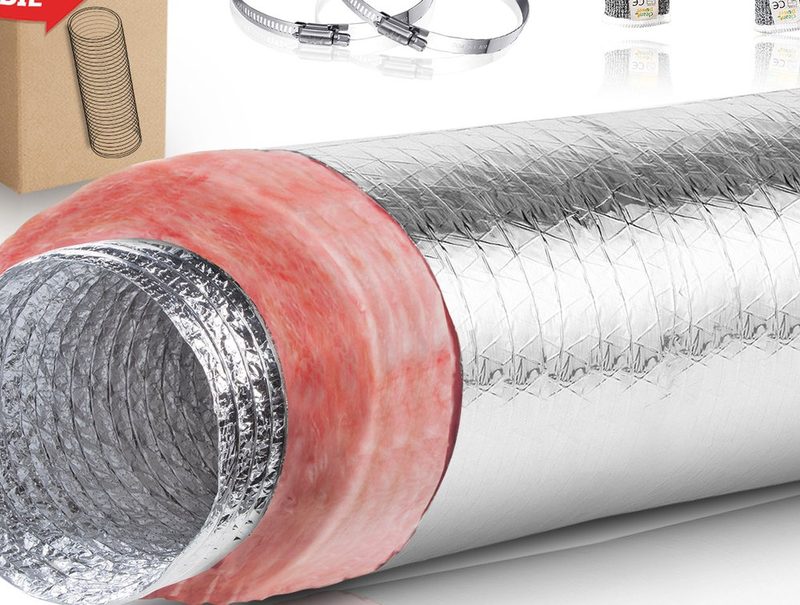
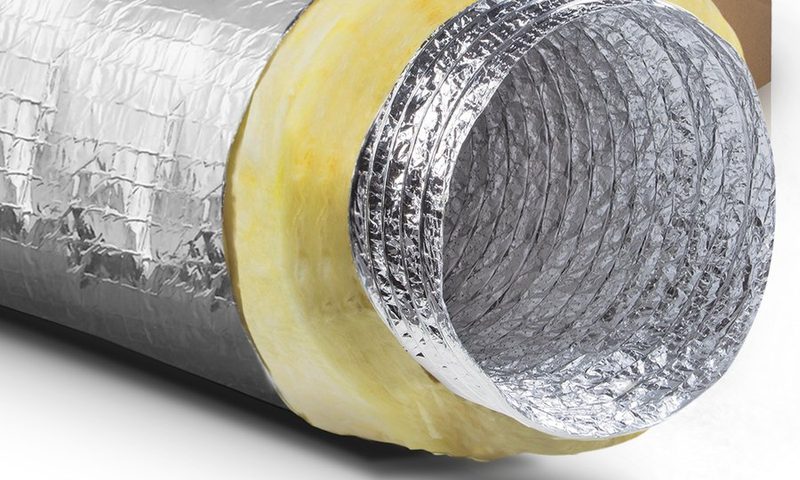
This is the most overlooked condition. With an intact jacket and pressed joints, moisture never reaches the insulation and condensation stays on the outermost surface, where you can wipe it off. But once a joint loosens or the jacket is punctured, moisture goes straight into the wool; wet wool conducts more heat, the wall runs colder and condensation worsens — a positive feedback loop.
So what should change
Check in this order:Start with joints and jacket (is it loose, is it torn), then checkwhether this section has been flattened, and only then considerwhether the R-value is too low. Guest-room branches are usually only three to five metres and R4.2 is already enough; extra thickness rarely fixes a leaking joint — the money is spent and the water still drips.
In one line:Condensation is the result of all three conditions being met; block any one and the problem disappears. The easiest to block is the joint.